Events - May 2025
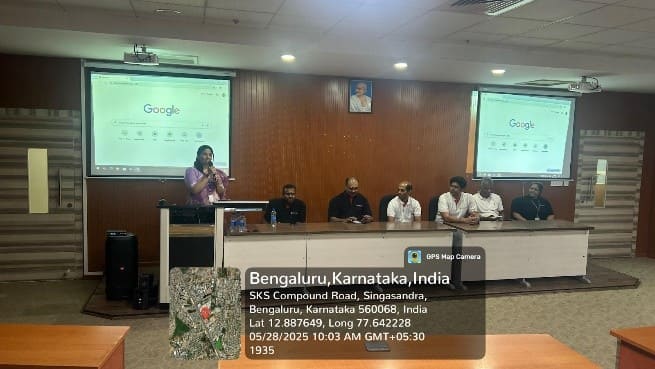
MCA - Placements Drive by Caze Labs (28th May 2025)
The School of Computer Applications, Dayananda Sagar University, is pleased to share the successful completion of an Internship Drive by Caze Labs Private Limited—a pioneering product-based technology company specializing in Artificial Intelligence, Cybersecurity, and Cloud-native Technologies. The drive was conducted on 28th May 2025, marking a significant opportunity for students to align their academic learning with real-world industry exposure.
We are proud to announce that 33 final-year MCA students from the 2023–2025 batch have been successfully selected as interns at Caze Labs Private Limited. This marks a substantial milestone in our continuous effort to bridge academia and industry by connecting students with innovative, growth-oriented companies.
Caze Labs Private Limited stands at the forefront of next-generation technology solutions, committed to solving real-world challenges through the application of cutting-edge tools in AI, Cybersecurity, and Cloud-native platforms. The company is known for its agile product development culture, deep focus on innovation, and commitment to quality.
At the helm of this visionary enterprise is Mr. Sanil Kumar D, CEO of Caze Labs, a seasoned technology leader known for his strategic foresight, innovation-driven mindset, and robust experience in building scalable, secure, and intelligent systems. With a rich background in artificial intelligence and cloud-native infrastructures, Mr. Sanil Kumar has successfully guided Caze Labs toward becoming a trailblazing force in the tech industry. His ability to translate visionary ideas into impactful technological solutions continues to inspire the next generation of engineers and developers.
Sanil Kumar D is a seasoned technology leader with a proven track record in building scalable, secure, and intelligent systems. His passion for innovation and deep domain knowledge in AI and cloud-native technologies have been instrumental in shaping Caze Labs into a forward-looking, impactful organization.
The internship program offered by Caze Labs is designed to immerse students in real-world development cycles, enabling them to work on live projects, contribute to AI model development, participate in cloud-native system designs, and understand cybersecurity protocols and defense mechanisms. The company aims to nurture technical talent and equip them with skills and experience that are critical in today's dynamic digital landscape.
During the selection process, students demonstrated strong foundational knowledge, problem-solving ability, and a willingness to learn—qualities that aligned well with Caze Labs’ vision for its future workforce.



Student Enablement Program on Principles of Generative Ai Certification (26th May 2025 to 27th May 2025)
(In Association with Infosys Springboard platform)
The School of Computer Applications, in association with Infosys Springboard, organized a 2-day Student Enablement Program on Artificial Intelligence from May 26th to May 27th. The program was led by Pruthvi Adisesha, Senior Associate – Learning, Infosys, and Aishwarya Rajeev, Senior Analyst – Learning, Infosys and Mr. Vayu Nandan Tripathi, Senior Systems Engineer – Learning, Infosys. The program focused on Principles of Generative AI, equipping students’ proficiency in Language Models like GPT3 and a family of Human-Inspired new AI algorithms called Generative models and their applications.

Day 1: 26th May 2025
Course Title: Introduction to OpenAI GPT Models
The session, conducted by Mr. Vayu Nandan Tripathi, Senior Systems Engineer – Learning, Infosys. This dynamic, hands-on course introduced students to the fundamentals of generative AI and OpenAI's GPT technology. It began with core concepts like language models and the transformer architecture that powers GPT. Students explored how pre-trained models generate human-like text and can be applied across various tasks.
Through live demonstrations, the course showcased real-world GPT applications such as the following.
- Automated HTML Code Generation: Demonstrating how GPT can assist web developers by converting plain text instructions into functional HTML code.
- IntelliSense Development: Exploring how GPT can enhance coding environments by predicting and suggesting context-aware code snippets.
- Language Translation: Highlighting multilingual capabilities and how GPT can serve as a powerful tool for cross-language communication.
- Text Summarization: Teaching students to extract key insights from large documents quickly using GPT-based summarizers.
- Question Answering: Showing how AI can be used to build smart assistants capable of answering complex queries based on contextual understanding.
- Text Classification: Applying GPT models for sentiment analysis, spam detection, and topic categorization.
The course concluded with a practical Python coding session using OpenAI’s API to build a simple yet powerful GPT-based application.
By the end of the course, students were equipped with the foundational knowledge and practical skills necessary to understand, experiment with, and apply GPT models in a variety of real-world scenarios. The course also laid the groundwork for further exploration in AI and machine learning, encouraging participants to continue their learning journeys in the rapidly evolving field of generative AI.


Day 2: 27th May 2025
Course Title: OpenAI Generative Pre-Trained Transformer 3 (GPT-3) for Developers
The session, conducted by Aishwarya Rajeev, Senior Analyst – Learning, Infosys. OpenAI GPT-3 for Developers is an advanced, application-focused course designed to equip developers with the skills to build intelligent applications using GPT-3.
The course began with an in-depth overview of GPT-3’s architecture, breaking down the inner workings of large-scale transformer models. Students examined the key components of language models including tokenization, embedding layers, self-attention mechanisms, positional encoding, and context windows. These foundational elements were connected to how GPT-3 processes and generates human-like text.
Students also explored practical use cases through the OpenAI Playground and Python, gaining hands-on experience in prompt engineering and API integration. The course also covered on how to solve specific natural language tasks and included interactive exercises and a final project to reinforce learning.
One of the course's strengths was its focus on hands-on experience. Using the OpenAI Playground, learners explored GPT-3’s capabilities in an interactive, low-code environment, gaining insights into how prompt phrasing, context length, and temperature settings affect output quality. The course then transitioned to Python-based development, where students learned to interact directly with the GPT-3 API.
Key programming modules included:
- Prompt Engineering Techniques: Designing effective prompts to optimize output quality, relevance, and consistency.
- API Authentication & Request Handling: Setting up secure API access and managing input/output flows.
- Response Parsing & Post-processing: Extracting structured insights from unstructured GPT responses.
Real-world use cases were explored in depth, including:
- Chatbot Development: Building dynamic, context-aware conversational agents.
- Content Generation: Automating the creation of articles, blogs, emails, and code documentation.
- Text Analysis & Summarization: Implementing systems for extracting summaries, detecting sentiment, and analysing intent.
- Code Assistance: Using GPT-3 to write, refactor, and explain code.
- Q&A Systems: Creating smart assistants capable of understanding and answering domain-specific questions.
The course also featured interactive exercises, quizzes, and a capstone project, where learners were challenged to create a fully functional GPT-3-powered application. This final project emphasized problem-solving, creativity, and real-world API usage, ensuring that students could confidently translate their learning into impactful software solutions.
Course Title: Generative models for developers
The session, conducted by Mr. Vayu Nandan Tripathi, Senior Systems Engineer – Learning, Infosys. "Generative Models for Developers" is an immersive, hands-on course designed to introduce students and developers to the rapidly growing field of generative artificial intelligence, with a specific focus on Generative Adversarial Networks (GANs). The course offered a solid foundation in the theory, architecture, and real-world applications of generative models, empowering students to build and experiment with models that can generate synthetic data such as images, text, and audio.
The course began by establishing a clear conceptual distinction between generative and discriminative models. Through illustrative examples and visualizations, students learned how generative models attempt to model the underlying distribution of data in order to generate new, similar instances, while discriminative models focus on distinguishing between classes of input.
Building on this foundation, the course introduced several types of generative models, with a strong focus on Naïve Bayes classifiers and Generative Adversarial Networks (GANs).
A significant portion of the course was dedicated to understanding the architecture and functioning of GANs, including:
- The training dynamics between the generator and discriminator.
- The iterative adversarial process that drives improvements in generated outputs.
- Techniques for improving training stability and convergence.
The course went beyond basic GANs to introduce advanced variants such as Deep Convolutional GANs (DCGANs), which are particularly effective in generating high-quality images. Students examined use cases across multiple domains, including:
- Image Generation: Creating realistic human faces, objects, and scenes.
- Data Augmentation: Enhancing training datasets with synthetic data for improved model performance.
- Style Transfer & Super-Resolution: Applying GANs to artistic tasks and image enhancement.
- Anomaly Detection: Using GANs to model normal data and detect deviations.


The sessions were both interactive and well-organized, providing students with essential skills and knowledge to excel in the field of AI. Overall, the program effectively boosted participants' expertise and confidence in artificial intelligence, while the certification courses offered additional opportunities for students to validate their AI skills and knowledge.
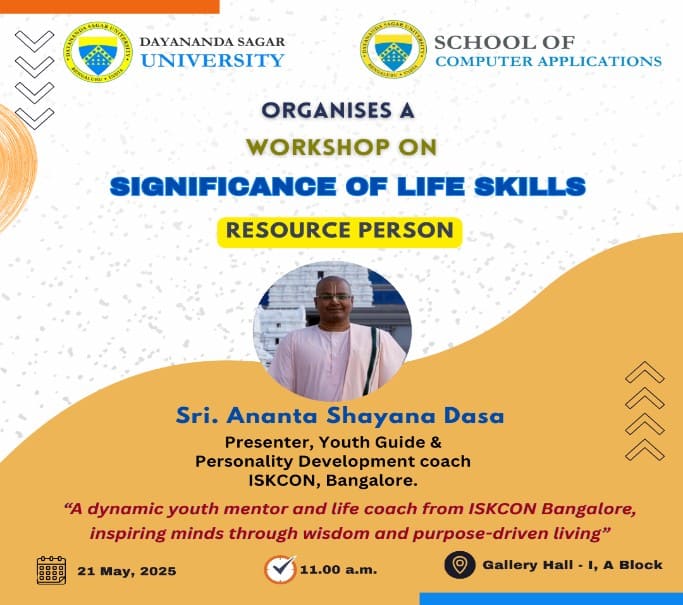
Workshop on “Significance of Life Skills” (21st May 2025)
The School of Computer Applications recently organized an engaging and insightful workshop on Significance of Life Skills under the guidance of our beloved Dean Dr. S. Senthil. The session was led by the distinguished guest speaker, Sri Ananta Shayana Dasa, a renowned presenter, youth mentor, and personality development coach from ISKCON, Bangalore. The session commenced with a warm introduction by our respected Dean, Dr. S. Senthil.
The workshop began with Sri Ananta Dasa sharing personal anecdotes from his life journey, setting an authentic tone for the session. In an unconventional yet impactful approach, he invited students to ask questions right at the beginning. This open-floor interaction covered a wide range of topics from personal experiences and philosophical reflections to career-related challenges. With patience and insight, he addressed each query while connecting them to core life skills.
His discussion also included the importance of happiness for holistic well-being encompassing mind, body, and spirit. He stressed the value of effective time management through daily prioritization, and the critical role of people skills in adapting to professional environments. Sri Ananta Dasa also underscored the foundation of ethical behaviour, shaped by personal values and our interactions with others. Most importantly, he emphasized the need for individuals to identify and pursue a clear purpose in life.
The session created a safe and open environment where students could express themselves freely, reflect on their personal growth, and explore ways to integrate essential life skills into their academic and professional journeys.
The workshop was both informative and transformative, equipping students with practical wisdom and enhancing their perspective on personal and professional development. His deep insights and relatable delivery inspired students to adopt a more thoughtful and purpose-driven approach to life, reinforcing the importance of life skills in achieving long-term success.


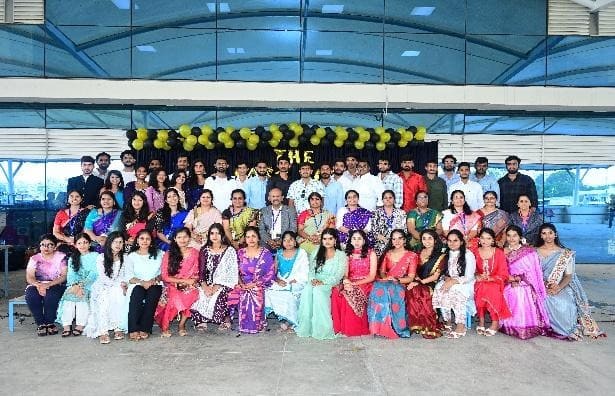
The Last Scene – Farewell 2025 (20th May 2025)
The School of Computer Applications at DSU hosted a heartfelt and memorable farewell event titled “The Last Scene – Farewell 2025” on 20th May 2025, to honour and celebrate the outgoing batches of BCA (6th Semester) and MCA (4th Semester) students. The event served as a platform for students and faculty to reflect on cherished moments, celebrate accomplishments, and bid an emotional adieu as the graduating students embark on a new chapter of their lives.
The event commenced with a warm welcome and a felicitation ceremony, where each graduating student was honoured by Dr. S. Senthil, Dean & Professor, School of Computer Applications. In his inspiring address, sir emphasized the importance of preparation, resilience, and continuous learning in the ever-evolving world. His motivational words resonated deeply with the students, encouraging them to embrace future challenges with confidence and optimism.
Following the address, final-year students were invited to share their reflections and experiences at DSU. A touching video presentation recaptured unforgettable moments from their academic journey, evoking nostalgia and joy among everyone present.
The second half of the event was brought to life by vibrant cultural performances curated by the junior students. With enthusiastic displays of singing, dancing, and heartfelt speeches, they expressed their admiration and best wishes for their seniors. The atmosphere was charged with energy, laughter, and emotions as both students and faculty celebrated the bonds forged over the years.
The program concluded on a warm note with a delicious lunch, where everyone came together one last time to share smiles and conversations. The event was beautifully wrapped up with lively photo sessions, ensuring that the memories of the day were captured and cherished forever.



Inauguration of Technical Clubs (7th May 2025)
The School of Computer Applications at DSU marked a significant milestone on May 7, 2025, with the grand inauguration of three innovative technical clubs – Synapse (IoT), Coderise (Coding), and Cyber Core (Cybersecurity). This event was aimed at empowering students through practical exposure, fostering innovation, and preparing them for the evolving landscape of emerging technologies.
The program commenced with a warm welcome, followed by the introduction of the Chief Guest, Dr. Ram Kumar, by Dr. S. Senthil, Dean & Professor, School of Computer Applications. In his address, Dr. Senthil highlighted Dr. Kumar’s illustrious career, his contributions to academia and industry, and his global leadership as cybersecurity influencer. He also commended Dr. Kumar’s dedication to mentoring young minds and emphasized the significance of having such an inspiring figure to inaugurate the clubs.
Dr. Ram Kumar then delivered a profoundly insightful keynote address. He emphasized the importance of technical clubs as platforms for exploration beyond the classroom, where students can transform their theoretical understanding into real-world applications. He encouraged students to stay curious, think innovatively, and embrace collaboration—traits essential for future technologists. His motivational speech served as a catalyst, igniting enthusiasm and ambition among the student body.
The inauguration ceremony of the three technical clubs followed, marking the official launch of:
- Synapse (IoT Club): Focused on connected systems, automation, and smart technologies.
- Coderise (Coding Club): Centered for algorithmic thinking, competitive programming, and software development.
- Cyber Core (Cybersecurity Club): Dedicated to digital safety, ethical hacking, and threat mitigation techniques.
Post inauguration, a mini project expo was organized where students showcased projects related to IoT, coding, and cybersecurity. The projects demonstrated students innovative thinking, technical endeavours, and problem-solving skills. Some notable exhibits included IoT-based smart home automation, AI-integrated chatbot applications, and cybersecurity simulations.
Dr. Ram Kumar showed great enthusiasm and genuine interest in the student projects. He personally interacted with the student presenters, posed thought-provoking questions, and offered valuable feedback on how they could enhance and scale their ideas further. His encouragement greatly motivated the students, reinforcing the value of such experiential learning platforms.
The event concluded on a high note, with students inspired and eager to participate actively in the newly formed clubs. The inauguration was not only a ceremonial beginning but also the foundation of a vibrant technical ecosystem at the School of Computer Applications—one that promises continued learning, innovation, collaboration, and growth.
With Synapse, Coderise, and Cyber Core now officially operational, the institution takes a bold step forward in aligning education with industry expectations and preparing students to become future-ready tech leaders.
{gallery}/CA/events/ITC_07052025/{/gallery}ARCHIVES
- May - 2026 (6)
- April - 2026 (11)
- March - 2026 (8)
- February - 2026 (10)
- January - 2026 (5)
- December - 2025 (1)
- November - 2025 (8)
- October - 2025 (5)
- September - 2025 (8)
- August - 2025 (4)
- July - 2025 (7)
- June - 2025 (2)
- May - 2025 (5)
- April - 2025 (1)
- February - 2025 (2)
- January - 2025 (7)
- May - 2024 (2)
- April - 2024 (2)
- March - 2024 (6)